What is famous about Kahuzi-Biega National Park

The park is a UNESCO World Heritage site known for its biodiversity and unique culture. Kahuzi-Biega National Park is home to the remaining Eastern lowland gorillas in the world and the only place where eastern lowland gorillas can be seen in Africa, the park was gazetted in 1938 and it covers an area of about 6,000 square kilometers making it one of the oldest national parks in the Democratic Republic of Congo. The park is also surrounded by lowland forest, montane forest and bamboo forest. This remarkable Park is home to a remarkable diversity of plant and animal species, including over 1,000 species of plants, 136 species of mammals, and 349 species of birds. Some of the endemic wildlife species here include Alexander’s bush squirrel, Aquatic civet, eastern needle-clawed galago, giant genet, Maclaud’s horseshoe bat, Ruwenzori least otter shrew, Thomas’ tree squirrel, and the mount Kahuzi climbing mouse.
Home to the Eastern Lowland Gorilla
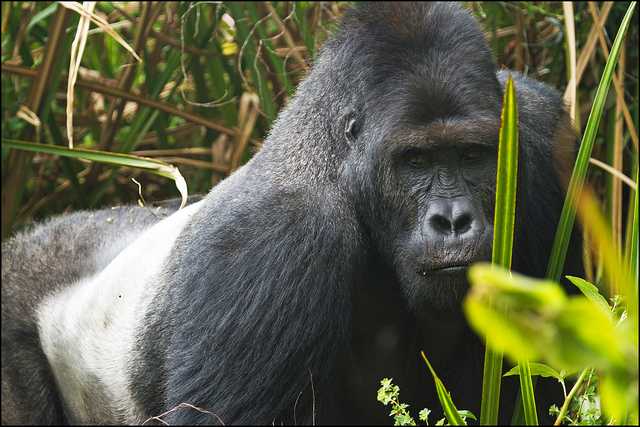
The Kahuzi-Biega National Park is world-renowned for being one of the last remaining habitats of the majestic Eastern Lowland Gorilla. the Eastern Lowland Gorilla also known as Grauer’s gorilla is the largest of the four-gorilla subspecies. It is distinguished from other gorillas by its stocky body, large hands, and short muzzle. Despite its size, eastern lowland gorillas subsist mainly on fruit and other herbaceous materials, just like other gorilla subspecies. This critically endangered species is a subspecies of the mountain gorilla and can be found in the park’s lush valleys and mountainous regions. The park is home to over 400 Eastern lowland gorillas residing in 9 groups. The Eastern Lowland Gorilla is an impressive creature, with adult males weighing up to 220 pounds and reaching heights of 6 feet tall. Its gentle giant reputation makes it a favorite among visitors, who come to observe these magnificent creatures in their natural habitat. Tracking Eastern lowland gorillas in Kahuzi-Biega starts with a briefing at the Tshivanga Visitor Centre which is found outside the park entrance. After the briefing, visitors are then led through established trails in search of the gorilla group. Gorilla trekking these fascinating creatures in Kahuzi-Biega National Park takes about 1 to 2 hours depending on where the gorillas are allocated.
Abundant Wildlife
Kahuzi-Biega National Park is a veritable paradise for wildlife enthusiasts. The park is home to over 1,000 plant species, 315 bird species, and more than 130 mammal species. Some of the mammal species found here include bush elephants, bush buffaloes, Leopards, Leopards, hylochere, bongo, aquatic civet, the eastern needle-clawed galago, Maclaud’s horseshoe bat, the Rwenzori least otter shrew, alexander’s bush squirrel, the Albertine owlet, shrew, Thomas ‘tree squirrel, and the Mount Kahuzi climbing mouse.
The park is also home to primate species such as chimpanzees, owl-faced monkeys, Angolan black monkeys, blue monkeys, Bosman’s potto, Dent’s Mona, red-tailed monkeys and so much more.
For bird enthusiast, the park also offers opportunity to sight different colorful bird species such as African Green broadbill, Congo Peafowl, Rockefeller’s Sunbird, Rwenzori Turaco, Helmet Shrike, Yellow Chested Helmet, handsome Francolin, Shelley’s Crimsonwing, trogons, Red-eyed Doves, African Black Swift, Long-crested Eagles, Bush Shrike, Brown Chested Alethe, African Hill Babblers, Ethiopian Crimsonwing, Red-faced Cisticola among others. Visitors can take guided tours to spot these incredible creatures in their natural habitats.
Traditional Communities and Cultural Heritage
Kahuzi-Biega is home to several traditional communities, including the Bakunda and Batembo people as well as Batwa people. The Batwa people are a traditional community whose cultural heritage is connected to Kahuzi-Biega National Park. The Batwa were displaced from their ancestral lands when the park was established in the 1970s. For Batwa people, their ancestral lands are essential for their physical and cultural survival – they depend on natural forest resources to live and their connections with the land and forest are a central part of their cultural and spiritual lives. This has since become a sanctuary for many species including eastern lowland gorillas, chimpanzees, elephants, and various birds. These communities have lived in harmony with the forest for generations, preserving their traditional ways of life and cultural practices. Visitors can experience the rich cultural heritage of the park’s communities by visiting traditional villages, attending cultural performances, and participating in community-led tours.
Unspoiled Waterfalls and Lakes
One of the most spectacular features of Kahuzi-Biega National Park is its unspoiled waterfalls and lakes. The park is home to numerous waterfalls, including the impressive Tshibati Waterfall. A hike to Tshibati waterfalls in Kahuzi-Biega National Park takes about 2 hours or less depending on your hike pace. which cascades into a crystal-clear lake. The hike to these pristine waterfalls offers you the chance to explore the park’s landscape, which includes tropical forests, bamboo forests, and wetlands. You may get the opportunity to encounter some chimpanzees, blue monkeys, grey-cheeked mangabey, olive baboons, black and white colobus, and others.
A Chance to See Africa’s Unique Okapi
Kahuzi-Biega National Park is one of the only places where visitors can see the elusive okapi, Africa’s unique and endangered giraffe-like animal. The okapi is a shy and timid creature, but with the help of experienced guides, visitors can catch a glimpse of this incredible creature roaming in the wild. Observing an okapi in its natural habitat is a once-in-a-lifetime experience that will leave a lasting impression on all who witness it.
UNESCO World Heritage Site
Kahuzi-Biega was declared a UNESCO World Heritage Site in 1984, recognizing its natural and cultural significance. The park is one of the most biologically diverse places on Earth, with an incredible array of flora and fauna that are found nowhere else on the planet. The park’s cultural significance is also recognized, with its rich cultural heritage and traditional communities that have lived in harmony with the forest for generations.