What is Virunga National Park famous for?
Virunga National Park is a protected area located in the eastern part of the Democratic Republic of Congo lost to the border with Rwanda and Uganda. It’s a UNESCO World Heritage Site. More so, it is located in the center of the Albertine Rift, of the Great Rift Valley. It is one of the most diverse tropical rainforests and the oldest national park in Africa mostly famous for mountain gorillas. Virunga is the oldest national park in Africa gazetted in 1922 and covers an area of about 7, 800 Square Kilometers. Virunga National Park is one of the best destinations in the world to see Mountain Gorillas it is one of the three national parks that are found in the Virunga ranges, other national parks include Mgahinga Gorilla National Park found in Uganda and Volcanoes National Park found in Rwanda. Additionally, Virunga National Park is unique with its active chain of volcanoes and rich diversity of habitats that surpass those of any other African park.
What is Virunga National Park famous for?
A Haven for Gorillas (Especially Mountain Gorillas)
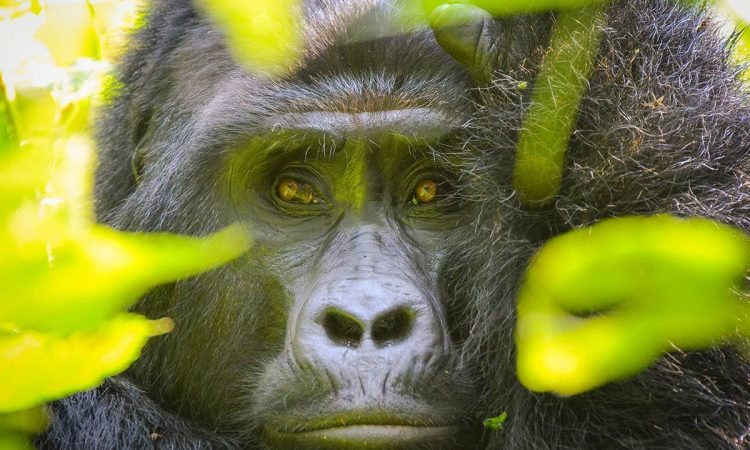
Virunga is perhaps most renowned for its population of endangered mountain gorillas. These gentle giants, covered in thick, dark fur, lived high up in the misty, volcanic mountains. They are critically endangered, meaning their numbers are incredibly low worldwide. Virunga, along with neighboring parks such as Bwindi Impenetrable National Park, Mgahinga Gorilla National Park in Uganda, and Volcanoes National Park in Rwanda, is one of the only places on Earth where you can still find them in the wild. Protecting these gorillas from poachers (people who hunt illegally) and habitat loss (when their homes are destroyed) is a massive ongoing effort. Rangers patrol the park daily, sometimes risking their lives, to ensure the gorillas’ safety.
starts early in the morning at the park headquarters with a briefing at 7:45 am about the rules and regulations as well as the expectations abs carry-on items while in the forest. Thereafter you will be allocated an armed ranger guide who will lead you to the forest explaining to you each feature you’ll meet on your way. This activity involves on foot trek through the lush forests of Virunga in search of a habituated gorilla family. this activity is challenging and it requires one to be fit at the time of the trek.
Once you find them, you’ll be allowed to spend one hour interacting with them as they do with their daily activities such as playing, feeding, grooming among others. You’ll have a chance to take photographs, see other attractions like birds and primates depending on your luck, and learn more about the mountain gorilla habitat and how they survive in Virunga National Park.
The park offers gorilla trekking, which allows a limited number of visitors to observe these magnificent creatures up close, contributing to conservation efforts through tourism revenue. This carefully managed tourism helps to fund the park’s operations and provides local communities with an alternative to poaching.

A landscape of dramatic Volcanoes
Virunga is also renowned for its breathtaking volcanic landscapes. Virunga National Park is home to several volcanoes including active volcanoes, dormant volcanoes such as Mikeno, Karisimbi, Bisoke, and Sabinyo (Sabinyo), and extinct volcanoes. Among them, are the two most active volcanoes of Africa particularly Nyamuragira and nearby Nyiragongo. Mount Nyiragongo is an active stratovolcano with an elevation of 3,470 m (11,385 ft) in the Virunga Mountains associated with the Albertine Rift. Not much is known about how long the volcano has been erupting, but since 1882, it has erupted at least 34 times and the most recent eruption happened in 2002. Hiking the Nyiragongo Volcano is one of the once in a lifetime adventure one should do and this can as well be done in Virunga National Park on your Congo mountain gorilla safari
The volcanic soil is rich in minerals, which helps plants grow. The slopes of the volcanoes provide different habitats at different altitudes, supporting a diverse range of animals, from forest elephants to chimpanzees. The presence of active volcanoes, though potentially dangerous, also contributes to the park’s unique appeal and scientific interest.
Incredible Biodiversity Hotspot
Beyond gorillas and volcanoes, Virunga is a biodiversity hotspot. This means it’s home to an incredibly high concentration of different plant and animal species. The Park is home to over 218 mammal species, 706 bird species, 109 reptile species, and 78 amphibian species. It also serves as a refuge to 22 primate species of which three are the great ape instance mountain gorilla, the eastern plain gorilla, and the eastern chimpanzee, with a third of the world population of mountain gorillas. Other notable mammals you may encounter here include forest elephants, buffalos, lions, hippos, leopards, okapi, bongo, warthogs, waterbucks, bushbucks, red river hogs, giant forest hogs, topi aardvark, Kob, blue duikers, yellow-backed duikers among others. The park is also home to other primate species such as red-tailed monkeys, De Brazza’s monkeys, blue monkeys, golden monkeys, grey-cheeked mangabey, blue and white colobus monkeys, Dent’s mona monkeys, central Africa red colobus mantled Guereza and olive baboons. Nile crocodiles and monitor lizards are also sighted along the shores of lakes such as Edward, albert and Semuliki river.
The park’s varied landscape, which includes forests, savannahs, swamps, and even glaciers on the Rwenzori Mountains is also home to over 706 recorded bird species that one on a birding safari will have a chance to spot and see such as grey throated barbet, Madagascar bee-eater, Ruwenzori turaco, African fish eagle and many more.
A Park Facing Immense Challenges:
It’s important to acknowledge that Virunga faces enormous challenges. The region has been plagued by conflict and instability for decades. Armed groups operate within the park, posing a threat to both wildlife and the rangers who protect them. Poaching is a constant problem, driven by the demand for bushmeat and illegal wildlife products. Deforestation, caused by the need for firewood and farmland, is also shrinking the gorillas’ habitat. Virunga’s story is therefore a story of conservation in the face of adversity. Rangers and the animals are both in danger when they step foot in the park.